

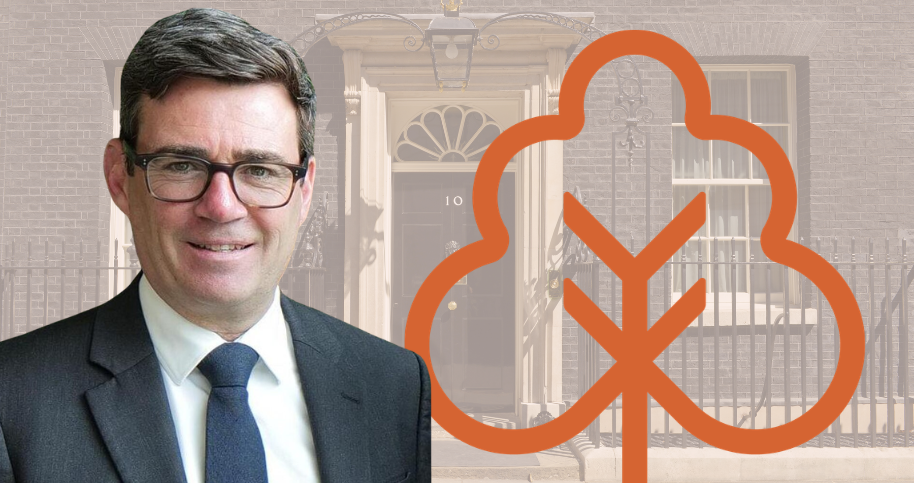
Who wants to be Andy Burnham?
 Wise News
Who wants to be Andy Burnham?
‘He twists with the wind and panders to the people in the room’ – The Economist June 27th 2026
In years to come schoolchildren will be asked the question – of the seven British Prime Ministers in the decade after the Brexit vote, only three were appointed after winning a general election. Which three? (hint – Andy Burnham wasn’t one of them). By the end of this month, Mr Burnham could be in the top job with a simple mandate – to deliver a package of reforms that engages the electorate and reassures the financial markets – a tightrope act that would appear to mean spending big on the one hand and not spending at all on the other.
For us investors, will there be anywhere to hide?
Are the UK’s public finances in as big a mess as we’re told they are? Short answer – yes – or so the bond markets think. That’s why the UK government’s borrowing costs are the highest in the G7 (an informal group of the world’s seven largest advanced economies).
Is our economy in dire straits too? Economists have been telling us since early March that the UK will suffer the most of any of the larger economies from the inflation caused by higher oil prices since Iran closed the Strait of Hormuz. Will the UK then not benefit the most from oil prices returning – as they already have – to their pre-war level of $72 per barrel?
Could it be true that the UK doesn’t suffer from one overarching malaise, but from a series of smaller issues that are capable of being tackled separately, and not necessarily at huge financial cost?
I imagine being on a train journey with Andy Burnham in the height of the heatwave at the end of June. We aren’t on our scheduled service, which has been cancelled owing to the heat, but on a delayed alternative via Birmingham Moor Street. The air conditioning has failed in all but one of the carriages, and we’re huddled together trying to hear one another over the hubbub of the other passengers excitedly telling each other which train they should have been on, while sipping water from small bottles and fanning themselves with empty crisp packets. Above all this the train announcer is advising us what to do if something doesn’t look right.
Undaunted, I glance down at the envelope with my policy notes on the back. The list goes like this – government debt and the fiscal rules – defence spending – economic growth – the tax system – Brexit and immigration – AI – relations with the US under Donald Trump – privatisations – devolution – net zero – universities – the pensions triple lock – agriculture – roads – and the unknown unknowns. I don’t have long – our train is due to arrive in an hour, so as we crawl along the overheated rails I probably have just over an hour-and-a-half. Listen up, Andy! My vote – and those of millions of others – depends on how you address these crucial issues.
Government debt and the fiscal rules
In case you haven’t had a moment to catch up with the rules since the interview with Victoria Derbyshire in which you appeared to have forgotten them, they are
- Stability Rule To move the current budget into balance, so that day-to-day costs are met by tax revenues. Specifically, the current budget, including everything apart from longer-term investment, must be in balance by 2029-30.
- Investment rule To reduce debt as a share of the economy by 2029-30. Debt is defined as net financial liabilities, a measure that takes into account the value of assets against which money has been borrowed.
There’s a third rule restricting spending on certain welfare items as a percentage of the total, but the first two are the main ones, defining the straitjacket you’ve agreed to be strapped into as Prime Minister. You may not like the bond markets, but they’re there! The memory of Liz Truss is too recent and too painful to be ignored. The government brochure which sets out the rules is honest enough to quote the Institute of Fiscal Studies as saying that a fiscal (tax-related) rule targeting debt falling in the fifth year of the forecast is ‘more arbitrary and gameable than most’. Translation – the hawks are on your case, the vigilantes are eagerly watching for any slippage, any weaselly bending of the definition of what counts as ‘investment’ or any other sleight of hand on your part.
To raise current spending, you’ll need to raise more tax. You can do that either by increasing tax rates – except that you’ve already said you won’t increase the main money-earners, Income Tax, National Insurance and VAT – or by making investments and reforms that will help employment and the overall economy to grow, naturally leading to a higher tax-take. This latter course would certainly be the less painful one.
To meet the second rule you must either reduce government debt or help the economy to grow so that the debt shrinks as a percentage of it. Again, the growth option is clearly the more attractive one.
Conclusion – in order to meet the fiscal rules your best solution is to stimulate economic growth. This was also the central promise of your predecessor Sir Keir Starmer at the general election two years ago. The main reason why he failed to achieve it was the decision by his Chancellor, Rachel Reeves, to make swingeing increases to Employers’ National Insurance, using the curious logic that the cost would fall on business ‘the ones with the broadest shoulders’ without affecting the hard-pressed British worker. The effect of the NI increases was compounded for employers by the big rise in the National Living wage, which doesn’t just affect those being paid the NLW, but also those on higher salaries, whose remuneration has to be increased to maintain the differential with the more junior staff below them. Ms Reeves’ ‘tax raid’ was a crushing blow to the UK’s business sector, leading to a generally more cautious attitude towards investment and expansion, redundancies, slower hiring and slower wage growth, all adding to the pressures on the working population – hardly the fertile soil for economic growth that your party had promised.
Growth
Sir Keir’s big idea was to build houses – to be precise, one-and-a-half million of them within the life of the parliament, in other words by July 2029. Just building houses doesn’t work by itself – they have to be the right sort of houses in places where people want to live, and they have to be affordable. There are external factors beyond your Government’s control. The US and Israel attacked Iran, Iran closed the Strait of Hormuz, the world price of oil rose by two-thirds at one point, general inflation spiked, and people stopped expecting cuts in interest rates and started expecting rises. All good reasons to defer buying your new home.
Still, 1.5 million houses in five years is a bold and unambiguous target, a lot less ‘arbitrary and gameable’ than some. It boils down to 25,000 houses a month for sixty months. From July 2024 to March 2026, 342,000 homes were built, around 17,000 a month. Up to this point, only two out of every three of Sir Keir’s targeted houses have been built. The Government has claimed that the numbers will ramp up towards the five-year point. Let’s see if they do!
Sir Keir’s idea was to achieve the higher total through reforming the planning process which had ground to a standstill under Rishi Sunak. Sir Keir has achieved partial success through re-introducing the minimum quotas for local authorities to approve planning applications and instilling a more positive ‘minded to accept’ mentality. He has been less successful in improving the overall efficiency of the system. House builders complain that planning offices tend to be understaffed, and with officers too junior to make necessary decisions. As Rachel Reeves likes to say, there is ‘much more to be done’.
From your recent statement, it appears that house building is part of your growth project, but focussed more on affordable housing, including council housing. Fair enough, but please ensure that these new homes are built on brownfield land wherever possible.
Devolution
This sounds like a good idea, and it’s a direction in which the country is already travelling. Decisions are better when made closer to the places they affect. One of the arguments for Brexit was that the one-size-fits-all policies handed down by the EU had no relevance to local conditions in the UK. Intelligent devolution could boost local economies, create employment, and benefit local environments. If it can be managed without great upheaval and expense, and without being a distraction from other government business (of which there should be less once responsibilities have been delegated to the regions), devolution could prove to be a winner.
AI
It’s a little-known fact that the UK leads Europe in high-tech start-ups. How do you propose to nurture these high-growth companies and incentivise them not to disappear to the US?
If AI decimates the legal, accountancy and fund management businesses as it already has with translation and coding, how are you going to afford the extra benefits payments of the newly-redundant workers within your fiscal framework?
The opportunities and threats of AI are already in our midst. How prepared is your government to reap the rewards of the one, while minimising the destruction of the other?
Relations with the US and its President
The last ten years have taught us a lot about Mr Trump, enough to know that there is no right way to manage a relationship with the man or his administration. Extreme sycophancy only works up to a point. Make America Great Again is an imperialist and isolationist notion that disregards any rules-based international system. Mr Trump’s role model appears to be his friend Vladimir Putin, who has centralised power within an autocratic state, and is using it to build (in Putin’s case re-build) an empire. Mr Trump is engaged in realising his vision of a new US empire encompassing Canada, Panama and Greenland, together with (probably) Cuba, and with hegemony over the whole of Central America and the north of South America. All this has been spelled out in his many speeches and writings. Mr Trump has no objection to using armed force to annex another country, for example Greenland, on no other pretext than that he sees it as in the US interest to do so. If China invaded Taiwan, Mr Trump’s objection could not be that China had committed an illegal act, as he has contemplated similar acts himself, but only because he felt that annexation would damage America’s interests.
Mr Trump’s is a Darwinian world, where the strong ‘hold all the cards’ and can do as they please. As he sees it, his United States is the biggest beast in the jungle and holds all the cards.
Co-operation is an alien concept for him.
Until recently, we have shared a common philosophy with the United States. This is no longer the case. Mr Trump has no use for democracy or the rights of sovereign states. He despises Europe for our historic sub-par defence spending, our lack of effective barriers to mass-migration, and our (as he sees it) surrender to a degenerate ‘woke’ culture. You and I consider ourselves as seekers of truth. Who wouldn’t want to know what’s really happening in the world? Mr Trump has no need to go out and seek for truth, as truth is always to be found where he is. Truth is defined as what Mr. Trump says it is today.
The attack on Iran was pure Trump. It didn’t occur to him to consult his allies before entering a conflict they wouldn’t have agreed to, but is nevertheless incensed that they didn’t rush to offer him military support after the event. Now he hails what everyone can see was a futile waste of lives and resources* as a great triumph. With less than half his presidential term expired, Mr Trump has already launched two world-disruptive events, the tariffs in April 2025 and the Iran war this year. We can only hope that the latter has weakened MAGA sufficiently to prevent any further outrages, and that the Republican nose will be bloodied in the mid-term elections this November. Meanwhile your government has somehow to maintain relations with Mr Trump’s America. The best you can do is to be clear where your red lines are, stand firm against bullying, and strengthen your relationships with the rest of the world, and particularly the remaining democracies. You have as good a chance of charming him as anyone. Are you any good at golf?
Defence
A decade ago Mr Trump made the point – perhaps the most valid political point he has ever made – that European NATO members were failing to fulfil their commitments to spend 2.0% of their national incomes on defence. He resents Europe’s reliance on the US for security and has substantially reduced it. Today the UK is spending 2.7% of its national income on defence, an amount considered by experts to be inadequate.
Our principal security risk is Russia, which NATO chiefs believe could attack as soon as 2030. You are going to face pressure to increase defence spending further, and that would come at the expense of other programmes – already the road and welfare budgets have been cut.
There are two separate issues here – defence and security. On the security front, we have been at war with Russia for many years. Russian agents poisoned the Skripals in Salisbury in 2018, the arsonist who set fire to Sir Keir Starmer’s properties in May 2025 was controlled by a Russian agent, and Russia has been responsible for damage to undersea cables serving the UK and other European countries – to say nothing of their disinformation campaigns and interference in elections. We need to be on the highest alert against these hostile acts, but these are security threats rather than acts of war.
They say that preparing for war is the best way to prevent one, but realistically how prepared will Russia be for another conflict when the Ukraine war finally ends? Mr Putin has stalled negotiations by making excessive, unacceptable demands until he can negotiate from a winning position. But he isn’t in a winning position. The strategy of frontal assaults on Ukrainian positions, known to the soldiers as a ‘meat storm’ has yielded almost no territorial gains, at a huge cost in human life – Russian soldiers are killed or wounded at a rate of 35,000 every month, and the total since the war started is around one and a half million. The Russian economy has stalled, following the initial war-related surge. Inflation is around 5.3% and interest rates over 14%. Ukraine has taken the war to Russia, and to the Crimea, with devastating effect. Putin has been reduced to war crimes, principally massive drone attacks on civilian targets centred on Kyiv. These are the tactics of desperation. Russia is exhausted, and even among the elites the sense is growing that a way out needs to be found. This is a country that looks overdue for a change of leader and a change of direction. Can it really be spoiling for another military adventure in a just few years’ time?
Meanwhile, it’s well known that defence procurement in this country is woefully inefficient. Suggestion – launch an in-depth enquiry into defence procurement looking for the major efficiency gains that you know exist, and meanwhile leave the level of military spending where it is.
Brexit
There was only one version of Remain, but several possible Brexits, and as the referendum didn’t indicate which one of them was intended, the government of the day opted for the most extreme one, a total break, ruling out membership of the EEA (the European Economic Area, known at the time as the ‘Norway Option’) or the customs union. The UK negotiators didn’t help matters with their arrogant assumption that the UK was such an important trading partner that the EU would have to give us the best possible deal. The world has become more hostile in the last ten years, and it is in our interest to be on the friendly collaborative terms with our large European neighbour – not just on trade, but in science, defence, healthcare, policing, security and much else. We know that the post-Brexit level of bureaucracy and delays make trading with EU countries virtually impossible for all but the largest firms, and many have given up the attempt. We know that up to this point our exit from the EU has significantly shrunk the UK economy. Economic growth is the key that will unlock the storeroom of your ambitions, so why not investigate the possibilities of a re-entry into the customs union, or even the EEA, neither of which would involve a referendum, a full ‘Brentry’ or whatever you might want to call it.
Tax
As we’re getting near to our station, I’ll try to keep this one short. Everyone knows that water flows best through a pipe that is both straight and clear, and systems work best when they’re simple and fair. The UK tax system is neither of these things. It has been endlessly tinkered with for decades and now needs root-and-branch reform. Remember – in a simple, fair system, which everyone understands and agrees with, you will receive more tax even though the rates of tax may be lower, because there will be fewer mistakes and less evasion. Here are a few examples
Income tax
Low earners shouldn’t pay tax on their incomes. The LibDems’ enlightened proposal of a major increase in the threshold was adopted during the 2010-5 coalition, but much of the good work has been undone by subsequent governments’ failure to index the threshold at the higher level. From 2019-20 to the current tax year, 2026-7, the threshold has increased by less than one percent, from £12,500 to £12,700. Not indexing thresholds is a stealth tax, raising tax without appearing to do anything. This one is particularly malign, as it increases taxes on the lowest earners, acting as a disincentive to work.
National Insurance
Your government imposes two taxes on employment – Income Tax and National Insurance. You should combine the two, which would hugely reduce the burden of administration for everyone. This would be a big project but a worthy one, and I suspect that the reason it hasn’t been undertaken before is because when the two taxes were combined, people would be horrified to see what a massive slice of their income is creamed off by your government before they ever get to see it. Combining Income Tax and NI would be a major step towards simplifying the tax system.
You should reverse your predecessor’s hike in Employers NI, another regressive move as the tax now starts on incomes of just £5,000 a year and is a barrier to employing entry-level staff. Mr Starmer’s government became notorious for making U-turns. This was the one they should have made, but didn’t.
VAT
Badly-designed taxes create avoidance, and VAT is no exception. The current threshold where a company has to register for VAT is £90,000. If your annual revenue is £89,500 you don’t have to charge VAT or account for it. At £90,000 you become an unpaid tax collector, with all the attendant responsibilities and penalties for failure, and are faced with the choice between putting your prices up by 20% and becoming uncompetitive, or absorbing some or all of the tax yourself. No wonder companies make mighty efforts to remain below the threshold. Cafes and shops shorten their hours, tradesmen work fewer hours and take payment in cash where possible, companies delay sending invoices to massage their revenues downwards. Firms have taken to splitting into two to keep their turnover below the £90,000 registration level.
Some experts advocate reducing the registration level, but would bringing even smaller businesses into the VAT net achieve the growth you seek?
The web of exemptions is nonsensical and needs to be radically simplified. Cakes, for example, are zero-rated – that’s to say they’re taxable at 0%, rather than exempt, meaning not taxable at all. Cakes includes sponges, eclairs and meringues, unless they’re frozen, or ice-cream cakes, or eaten in a restaurant, or out of a heated cabinet, when they incur the standard 20% rate of tax. Famously, a Jaffa Cake is a cake (zero-rated) rather than a chocolate biscuit (taxable at 20%) on the grounds that when it goes stale, it hardens, unlike a biscuit, which goes soft.
You need to put a red pen through this lot and start again.
Council Tax
Mrs Thatcher decided that it would be fairer to make all adults pay local taxes and not just householders, so she replaced the Rates with the Community Charge, the hated Poll Tax. After widespread protests and some riots, the government needed to reintroduce the rates, but of course the new system had to be given a new name to show that it wasn’t the rates back again (though of course it was). Estate agents drove everywhere in a frantic hurry, putting all domestic property into one of eight bands A to H. Band A contained properties worth less than £40,000, and Band H was for properties above £ 320,000. Today in Old Marston, Oxford, Band A properties pay £1800 a year, while Band H properties, which could be worth £millions, pay £5,400, just three times as much. If you want a perfect example of a regressive tax, please look no further. For an extreme example, the average Council Tax in Hartlepool is levied at 1.3% of the property’s value per annum : in Westminster the figure is 0.06%. The Hartlepool residents are paying more than twenty times as much of their property values as the far wealthier residents of Westminster. It’s understood that you are looking to reform Council Tax. You should – reform is long overdue**
Taxing the wealthy
Taxing the wealthy plays well politically – for most people that means ‘someone else is going to pay’. Governments are very good at taxing the ‘mass affluent’ and not so good at reaching the real billionaires with their fortunes stashed away in offshore trusts. You’re already taxing the workers and savers. You’ve just imposed Inheritance Tax on pension funds. You’ve reduced the annual Capital Gains Tax allowance almost to zero and done the same with the annual allowance on savings accounts. The indexation of capital gains so as to make CGT ‘not a tax on inflation’ is long gone. You’ve imposed Inheritance Tax on small working farms and on AIM shares, an exemption intended to stimulate ownership of growing companies in UK. You’ve introduced a levy on share dealing. You’ve reduced the amount of cash that people can invest in cash ISAs and are now charging tax on cash held in stocks-and-shares ISAs. Your reform of Council Tax is welcome but will increase the burden on the mass affluent in the south.
Isn’t it someone else’s turn next?
Roads
The condition of Britain’s roads has been in decline for at least a decade and is now appalling. In our area, some of the rural roads are impassible and new signs warning of a ‘failed road surface’ have started to appear. Drivers no longer look at the road ahead of them, their eyes are on the road beneath to try and avoid the next pothole. Journeys are slower, more stressful, more hazardous and more expensive in fuel consumption, and in wear and tear on the car and its driver. It’s good to see that the additional road budget is being released, and more remedial work is being done, but how long will it be till the potholes reappear? It seems that in this country, we pay firms to mend the roads. In other countries companies are paid to maintain the roads in good condition. There’s a difference. As Charlie Munger put it, ‘show me the incentive and I’ll show you the outcome’.
Privatisations
This is a tricky one. Thames Water, our local water and sewage provider, and the largest of the UK water companies with 16 million customers, is bankrupt, staggering along under debts of around £ 20 billion. Last year Thames hiked our monthly bill by around 40% and sent us an unctuous letter explaining that this money would be spent on much-needed improvements to make their service even better. Actually, a good proportion of the increase will go on paying the junk-bond level interest on £2bn rescue loan they received from their investors.
Some years ago, when running TB Wise Multi-Asset Income, I held an investment in Pennon, owner of South-West Water, Bournemouth Water, Bristol Water and more recently the Scilly Isles. Water companies are set targets by the regulator OFWAT, and they are rewarded for meeting these targets and fined if they fail. Pennon was ‘one of the good guys’ and nearly always received a payment for success. One of their most important targets was to raise customers’ bills by less than the rate of inflation. Pennon’s proud boast was that it hadn’t raised its charges at all. What OFWAT wasn’t monitoring was how much money companies invested in their infrastructure, and this, as is now clear, was woefully lacking. Result – water companies’ infrastructure is no longer fit for purpose and the companies discharge untreated sewage into rivers with frightening regularity, turning them a dirty brown colour instead of clear. The companies got away with this practice for many years – until along came Ashley Smith and Professor Peter Hammond, neighbours on the river Windrush, who began analysing the water companies’ data, were appalled, and formed the pressure group Windrush Against Sewage Pollution (WASP), which has found national acclaim for the accuracy of their data and the clarity of their analysis (recorded in the film series ‘Dirty Business’). Put simply, the water companies are killing our rivers. Thames Water, as part of their rescue package, have requested a relaxation of the environmental standards imposed upon them, which might help them to survive financially, but would be an environmental disaster. A petition, aiming to achieve one million signatures by October, asks for the water companies to be re-nationalised.
You must decide what to do. Privatisation should have worked, but it hasn’t. Maybe the water companies should not have been privatised in the first place, but now you’re faced with a crisis that is both an environmental and financial disaster. Renationalisation would be expensive and might fail. Could you afford to do it within the fiscal rules? On the other hand, can you turn a blind eye to a company that can only stay solvent by dumping even more raw sewage into the rivers?
Goodness, we’ve arrived at Euston!
Well, best of luck, and thanks for listening!
Reader, what would you do if you were Andy Burnham?
Next time – the universities, net zero, agriculture, into the unknown, AND for us investors, will there be anywhere to hide?
- * ‘a futile waste of life and resources’ in the sense that the war was meant to stimulate regime change in Iran, but the hoped-for uprising hasn’t happened, and the regime is if anything stronger. After the war the Strait of Hormuz is gradually reopening, but it was fully open before, and was toll-free, which may or may not be the case afterwards. Iran now knows that it can close the Strait any time it likes. Iran’s stockpile of enriched uranium (said to be around 300kgs, enough to make several nuclear warheads) remains intact. This is the same asset that Mr Trump claimed to have obliterated after the bombing campaign in June 2025. The Gulf States can no longer be seen as havens of sun and wealth in the Middle East, knowing that Iran can bomb them readily. They also know that the US is no longer a reliable ally that has their backs. The war has not resolved anything.
- ** The figures in this section have been taken mainly from the book Follow the Money by Paul Johnson.
Tony Yarrow, July 2nd 2026
Please note – this article contains the personal opinions of Tony Yarrow and is not intended to offer either financial or investment advice. Tony’s opinions are personal, and do not represent those of the company Wise Investment.

